Installation
The Tunnel
A tunnel built to raise awareness of the hostages and to demand that they be brought home. Dark inside, with echoes of gunfire and explosions. At the far end, two words, lit: ויהי אור, “Let there be light”.

How it started
A few weeks after 7 October Roni's friend, the designer Avia Maron, came to him about a collaboration, a performance built into an installation, together with the choreographer Galit Liss and the musician Avi Belleli, to echo the call to bring the hostages home.
The idea of building a tunnel came very quickly. An attempt to come close and touch the terror for a moment, to make the reality the hostages are living in real, and alongside it the hope and the light coming from the end of the tunnel.

What happens inside
Visitors were invited to walk the length of it, and to draw and write their own message on the walls as a demand to bring the hostages home.
The walls filled with the handwriting of everyone who had walked through before them.

A film from the installation
Where it stood
-
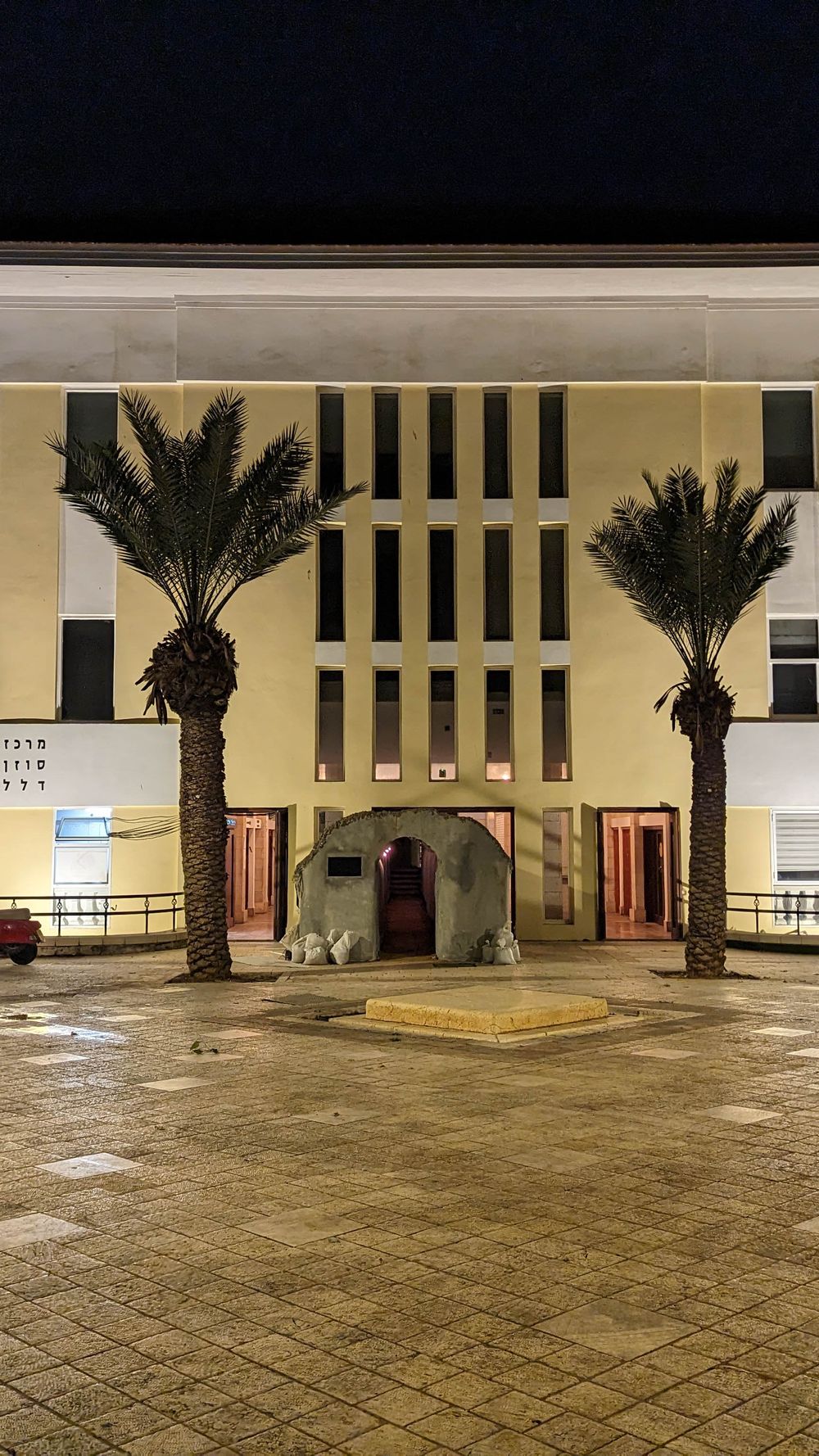
Suzanne Dellal Centre, Tel Aviv
November to December 2023
Within Tel Aviv's Lighting Up the Light programme, the performance and installation were shown on the Suzanne Dellal plaza.
-
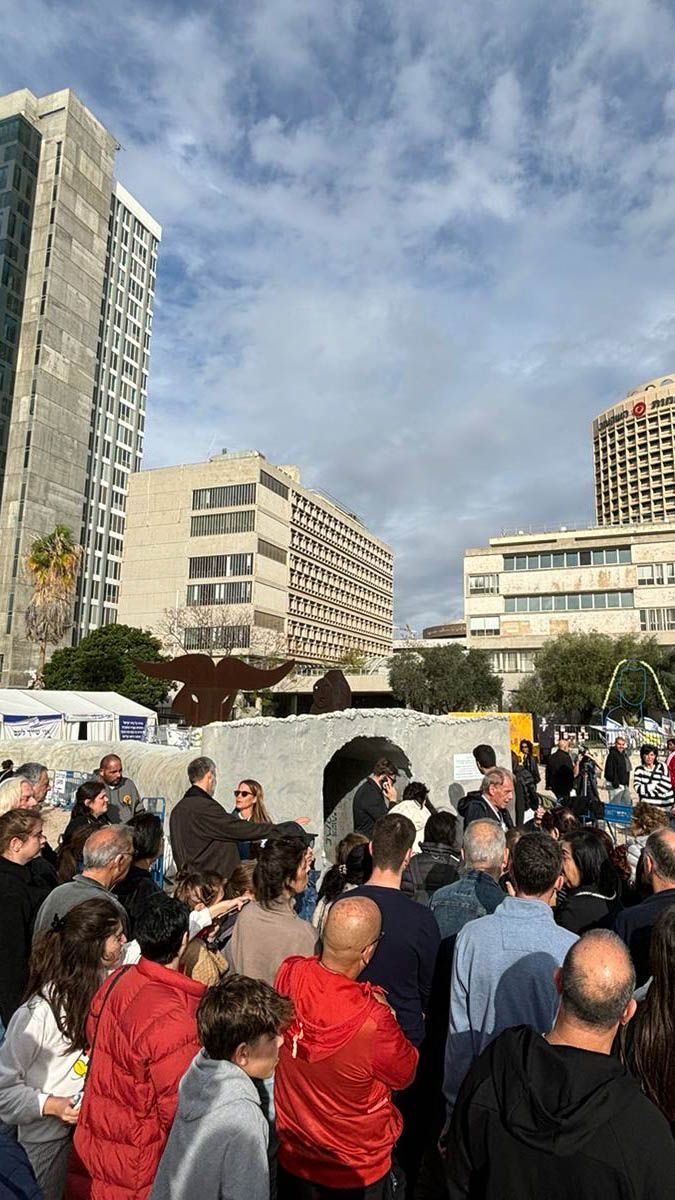
Hostages Square, Tel Aviv
13 January 2024
For the hundredth day of captivity the tunnel was rebuilt in four days, with many volunteers and the families' headquarters. It opened to the public after the hostages' families had walked through it.
-
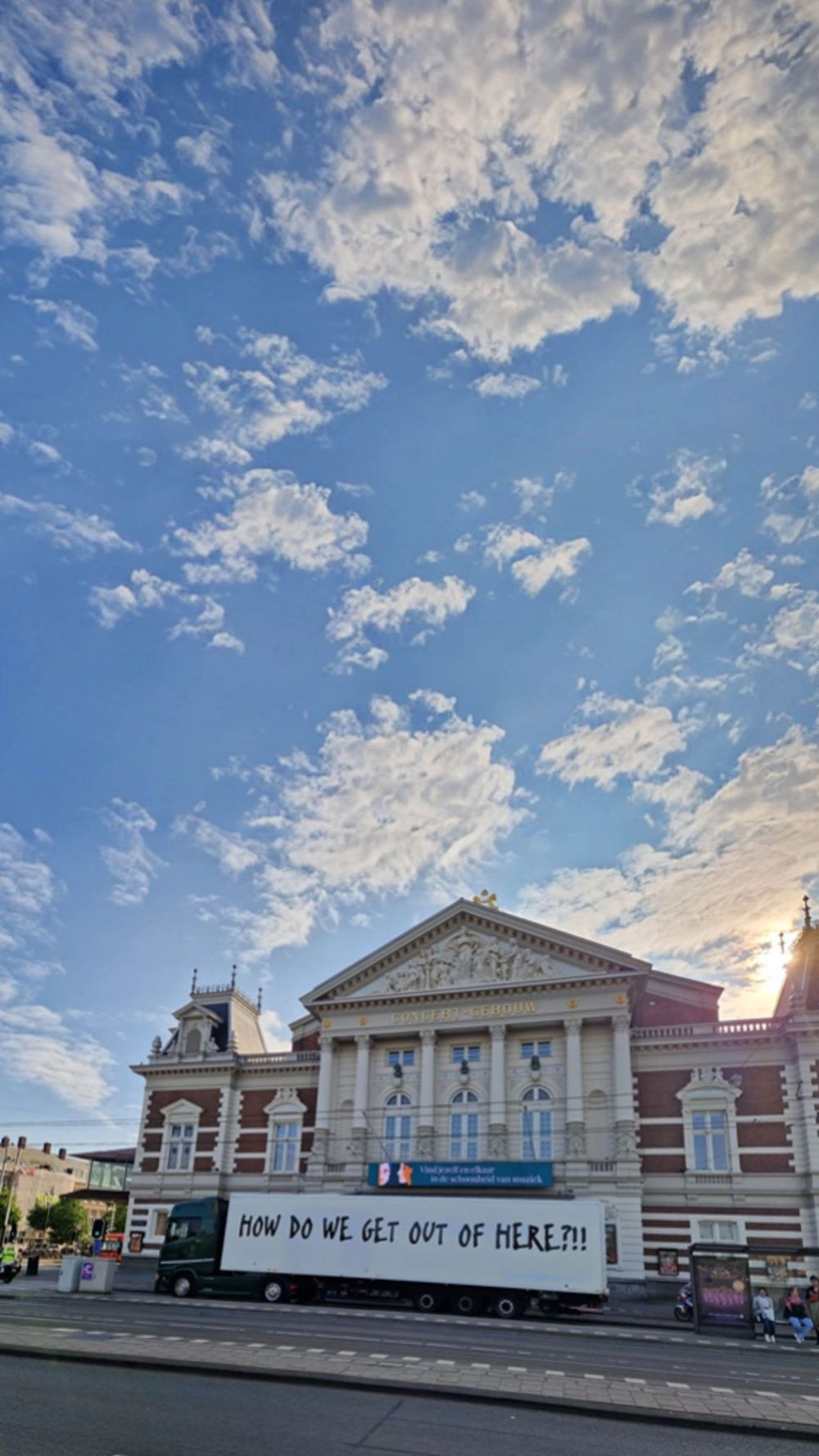
The mobile tunnel, the Netherlands
May 2024 to September 2025
Rachel Meijler, an Israeli Dutch gallery owner, came to Roni about building a mobile tunnel. They built it together inside a trailer, with twenty five volunteers, and it opened on the Museumplein in Amsterdam. From there it went to The Hague and Rotterdam, where Dutch members of parliament walked through it alongside passers by, and on to Urk, Nijmegen, Groningen, Tilburg, Eindhoven, Wageningen, Maastricht and two Amsterdam campuses, until September 2025. In the Netherlands it also drew protest against it, and needed security.


All of them are home
On 13 October 2025 the living hostages came home. On 26 January 2026 the last hostage, Ran Gvili, was brought back, and since then no hostages are held in Gaza. The living and the dead, all of them are home.
The Tunnel was built so that this day would come.
How it was built
Twenty five metres of tunnel, built from wood pallets and cardboard tubes and lined with PVC sheeting. Sandbags hold the structure up, and it is painted to look like concrete. Materials you can put back together anywhere, which is what let it travel.
People gave their energy and their skill to put it up, and all of it was done by volunteers. Everyone hoped it would become unnecessary before it was even finished. It did not.
Made with
- Avia Marondesigner
- Galit Lisschoreography
- Rachel Meijlerwho initiated the mobile tunnel in the Netherlands

What was written about the Tunnel
The Tunnel was covered in print and on television in 9 languages. These are the pieces where the installation is the subject, or where Roni is quoted.
Hebrew
- N12"מנהרת חמאס" בלב תל אביב: "לחטופים אין 20 שנה לחכות"
- Ynetאופיר ששוחרר מהשבי נכנס למנהרה בת"א: "אי אפשר לשרוד 100 ימים בתופת הזו"
- Davarלציון 100 ימים בשבי: מיצג בכיכר החטופים מדמה את המנהרות בעזה
- Arutz Shevaמיצג חדש בכיכר החטופים בת"א: מנהרה באורך 30 מטרים
- Maarivאופיר ששוחרר מהשבי מזועזע משחזור מנהרה: "זו תופת, אי אפשר לשרוד"
- Mivzak Live100 ימים בגיהנום: מאות ממתינים בתור לכניסה ל"מנהרת חמאס" בתל אביב
- Walla!אופיר ששוחרר משבי חמאס ביקר במנהרת ההזדהות בת"א
- iceהאימהות זועקות: "לפעול כדי להחזיר את כולם הביתה, עכשיו"
- At Magazineקול האימהות: נשים רוקדות בסוזן דלל למען השבת החטופים
- Portfolio magazineמה הולך // סרטים אופטימיים וגאגא למען זכויות אדם
- Israel Hayom"הזמן שלהם הולך ואוזל": אופיר אנגל, ששוחרר משבי חמאס, ביקר ב"מנהרת ההזדהות"
- Kikar HaShabbatאחרי ששוחרר: אופיר נכנס למנהרת ההזדהות במרכז תל אביב
English
- The New York TimesWhere Hostage Families and Supporters Gather, for Solace and Protest
- HaaretzHow I Found Myself Stuck in a Hamas Tunnel in the Middle of Tel Aviv
- Sky NewsRecreating Hamas Tunnel Conditions in Tel Aviv
- The Jerusalem PostNew exhibits at Hostage Square make Tel Aviv Museum a healing space
- The Times of IsraelAt The Hague, Israelis brave protests to present a portable 'Hamas tunnel' exhibit
- AFP via France 24Israel hostage families unveil Hamas tunnel replica
- Al-MonitorThousands rally in Israel for end to hostages' 100-day ordeal
- EFEReplica tunnel provides a glimpse into life in Hamas captivity
- Daily Express USIsrael: Families of hostages build huge mock Hamas tunnel
- ISRAEL21cIsraeli artists channel grief into poignant creations
- NoCamelsRallies & Replica Tunnels: Israel Marks 100 Days Of Hostage Hell
- The SunFamilies of Israeli hostages build huge mock Hamas tunnel as war in Gaza Strip reaches 100-day mark
- YnetnewsHostages' families illustrate horrors of captivity with tunnel exhibit
- YouTubeTunnel installation in Tel Aviv allows visitors to experience conditions under which hostages are being held
- JNS (Jewish News Syndicate)'Hostage Square': Epicenter of the movement to #BringThemHomeNow
- Jewish News (UK), YouTubeTHE TUNNEL @ Hostage Square in Israel; the powerful exhibition by Roni Levavi
- The Times of Israel (liveblog)Dutch lawmakers join passersby inside replica of Hamas tunnel in The Hague
Dutch
- Het ParoolReplica van Hamastunnel op het Museumplein
- NIWHamastunnel komt naar Nederland
- Het ParoolLopen door een 'Hamastunnel' op het Museumplein in Amsterdam
- NIW (Nieuw Israëlietisch Weekblad)De tunnel in voor meer begrip
- NOS Radio 1 Journaal (NPO Radio 1)Waarom moet deze replica van een Hamas-tunnel door Nederland te bezichtigen zijn?
- Orot Joodse Televisie, YouTubeHamastunnel op wielen door Nederland
- Jonet.nlReplica Hamas-tunnel moet mensen wakker schudden
- Omroep WestHamas-tunnel nagebouwd om aandacht te vragen voor gijzelaars
- Het UrkerlandReplica Hamas-tunnel donderdag op Urk tentoongesteld; doel is bewustwording
- De Havenloods (Rotterdam)Hamas-tunnel op de stoep van het stadhuis aan de Coolsingel
- De Brug NijmegenReplica van Hamas tunnel op Grote Markt
- Christelijk NieuwsRachel bouwde een 'Hamastunnel' om aandacht te vragen voor de gegijzelden
- RTV NoordKunstenaar Rachel bouwde Hamastunnel om aandacht te vragen voor burgerslachtoffers
- RTV NoordKunstenaar Rachel bouwde Hamastunnel na om aandacht te vragen voor burgerslachtoffers
- OOG GroningenReplica van Hamas-tunnel op Grote Markt
- OOG Groningen, YouTubeReplica Hamas-tunnel op de Grote Markt
- GIC (Groninger Internet Courant)Replica van Hamastunnel komt naar Groningen
- Tilburgers.nlNagebouwde 'Hamas-tunnel' om te bezoeken
- Omroep TilburgIndringende tunnelervaring op Pieter Vreedeplein: "Ik wil dat de oorlog stopt"
- Jonet.nlHamas-tunnel voor de deur UvA-Maagdenhuis
- De VrijdagavondTunnel voor het Maagdenhuis moet UvA wakkerschudden
- Nieuws van de Dag (Talpa/SBS6)'Het verbreken van contacten met Israëlische academici, is het slechtste wat je kan doen op dit moment'
- Cvandaag (column by Chief Rabbi Jacobs)Hoe de replica van een Hamastunnel het probleem van Nederland laat zien
- RTV RijnstreekExacte replica van een Hamas-tunnel in Wageningen belicht menselijk drama
- De Nieuwe Ster MaastrichtReplica Hamastunnel komt naar Vrijthof
- L1 Nieuws (Limburg public broadcaster)Rachel wil door nagemaakte Hamas-tunnels gesprek over oorlog op gang brengen
German
- ZDFheuteTel Aviv: Künstler baut Hamas-Tunnel nach
- 3sat KulturzeitGeisel-Tunnel veranschaulicht Hamas-Terror
- Deutschlandfunk KulturKunstprojekt in Tel Aviv baut Hamas-Tunnel nach
- DeutschlandfunkAngehörige israelischer Geiseln enthüllen Nachbau eines Hamas-Tunnels
- Tichys EinblickVerunsicherte Israelis zwischen trotziger Normalität und wachsenden Zukunftsängsten
French
- i24NEWSTel-Aviv : un tunnel du Hamas reconstitué sur la place des Otages
- Le MatinIsraël: un tunnel de Gaza reconstitué sur une place de Tel-Aviv
- TV5MONDEÀ Tel-Aviv, un tunnel et un rassemblement pour se sentir proche des otages à Gaza
- The Times of Israel (French edition)La Haye : Des Israéliens présentent une exposition itinérante des « tunnels du Hamas »